
Independent contractors generally do not receive employer payroll pay stubs for their client payments. They are self-employed rather than employees for that work, and the client ordinarily pays the agreed amount without employee payroll withholding. A client may send a payment statement, and may have to issue Form 1099-NEC for reportable payments, but that annual tax form is not a pay stub for each job or payment. The IRS explains the contractor forms and distinguishes them from employee Form W-2 wages.
This U.S. guide uses “independent contractor” for a worker who is correctly classified as self-employed. Calling someone a “1099 employee” does not decide their legal status. State rules, a contract, or a particular payment platform can add documentation duties, so check the agreement and applicable state law for a specific arrangement.

Which document records a contractor payment?
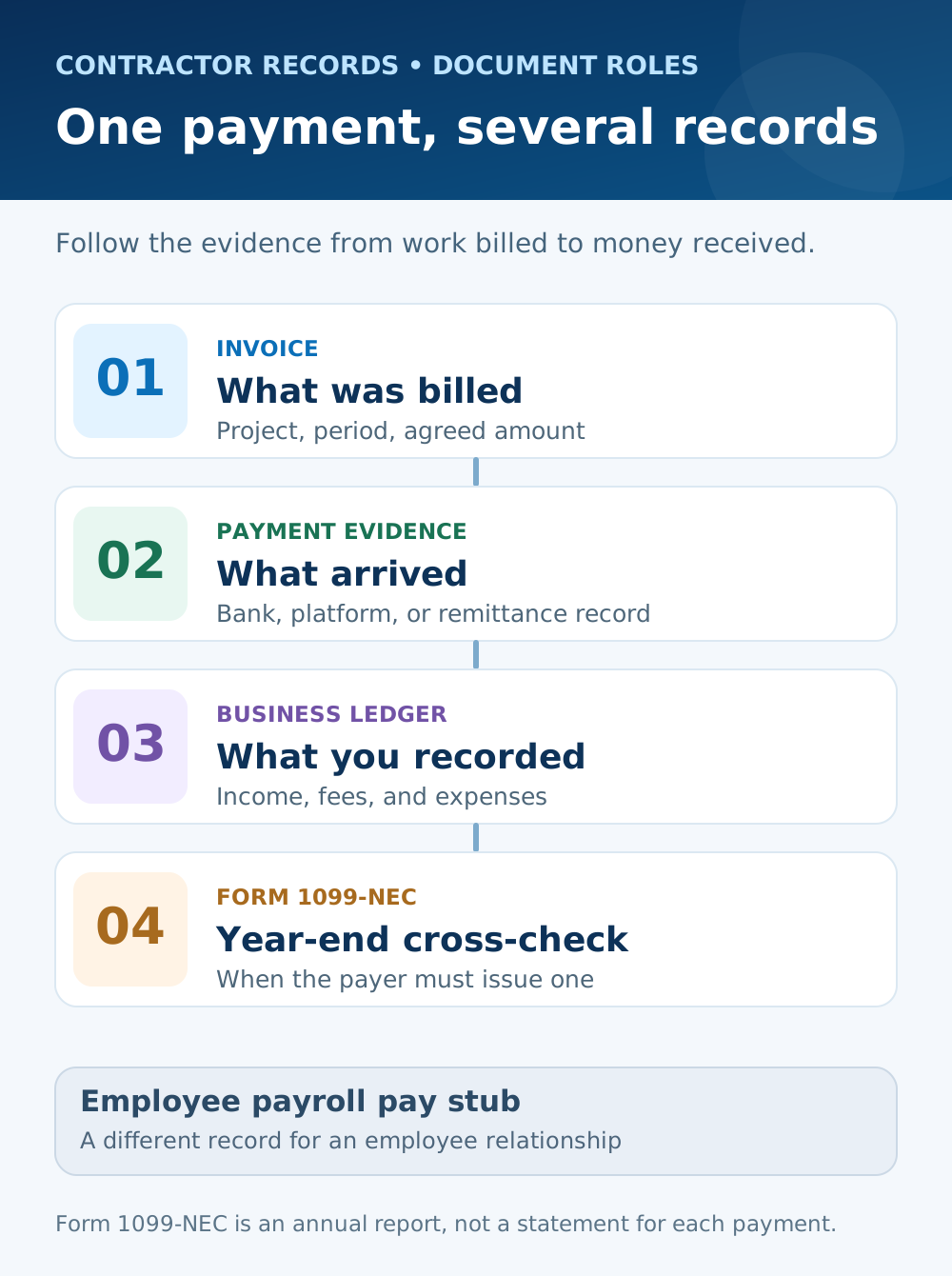
Start by separating four documents that answer different questions:
- Invoice or service record: what the contractor billed for a project or period. The invoice is a request for payment, not proof that payment arrived.
- Payment evidence: the client's remittance detail, bank or payment-platform statement, or canceled check showing what was actually paid. Match it to the invoice and note any adjustment or fee.
- Form 1099-NEC: a year-end information return for qualifying nonemployee compensation when the payer's reporting rules require it. It summarizes reportable payments; it does not show each payment's hours, client deductions, or an employee's payroll withholding. See the IRS payer guidance.
- Employee pay stub: an employer's wage statement associated with employee payroll. Whether an employee must receive one depends heavily on state law; the federal Fair Labor Standards Act requires employers to keep wage records but does not itself require employee pay stubs.
A contractor can keep a truthful payment summary for their own records. Label it as a contractor payment record rather than an employer-issued payroll stub if no employer issued it. A generated document does not independently verify the client, work, or income, and the organization requesting proof decides what it will accept.
Do contractors have taxes withheld from a client payment?
Usually not through employee payroll withholding. The IRS says businesses generally do not withhold or pay employment taxes on payments to independent contractors. There are exceptions, including backup-withholding situations, so check the actual payment record rather than assuming every contractor receives the full invoiced amount.
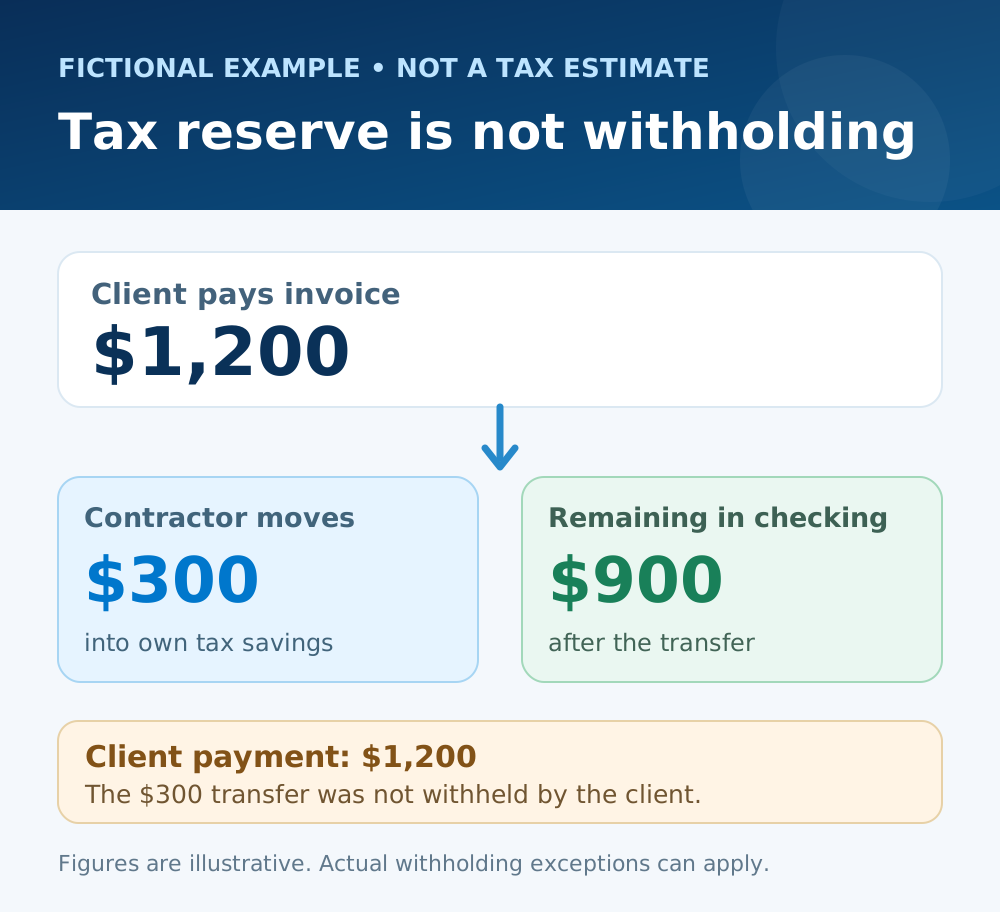
Suppose a contractor invoices a client for $1,200 and the client pays $1,200. If the contractor then moves $300 into a savings account for future taxes, the client still paid $1,200; the $300 is the contractor's own transfer, not tax withheld by the client. These are fictional amounts, not a tax estimate. Likewise, business expenses affect the contractor's bookkeeping and tax calculation, not the amount a client already paid. The IRS explains that independent contractors generally report business income on Schedule C, with self-employment tax handled separately when applicable.
How to build a reliable payment record
- Save the signed agreement or project terms, the invoice, and any change order.
- Record the date and amount received, the client, invoice number, payment method, and any fee or adjustment shown by the payer.
- Match the payment to the bank or platform statement. Investigate partial payments and duplicate entries before totaling the year.
- Keep receipts for business expenses in a separate category. Do not describe money you set aside yourself as a client's tax withholding.
- At year-end, reconcile Forms 1099-NEC with the underlying payment records, including payments from clients that did not issue a form.
The IRS advises gig workers to keep income and expense records and report income even when no Form 1099 arrives. Its recordkeeping guidance allows a system suited to the business if it clearly shows income and expenses. If a bank, landlord, or agency asks for proof of income, ask which original records and time period it accepts. Share sensitive records carefully; our safe-sharing guide covers basic document handling.
What if a client calls you a contractor but treats you like an employee?
Do not use the absence of a pay stub—or the presence of a Form 1099-NEC—as the only classification test. The IRS looks at behavioral control, financial control, and the relationship between the parties. A contract's label alone does not settle the question. If the facts are unclear, either the business or worker can ask the IRS for a determination using Form SS-8. The IRS determination concerns federal tax classification; check the relevant state agency for state-law questions. Keep the contract, work instructions, invoices, payment records, and correspondence while the issue is reviewed.
If you also have an employee job, keep its payroll pay stubs and Form W-2 separate from your contractor records. Our pay-stub basics guide explains the employee wage-statement fields. Mixing the two payment types can make taxes, income summaries, and documentation requests harder to reconcile.