
If the Social Security deduction on your paycheck becomes smaller or drops to zero late in the year, you may have reached the annual Social Security wage limit. That does not mean every payroll tax stops. Check the specific tax line, the tax year, and your year-to-date Social Security wages before treating the change as an error.
The 2026 Social Security wage limit is $184,500
The Social Security Administration's 2026 fact sheet lists $184,500 as the maximum taxable earnings for Social Security. At the standard employee rate of 6.2%, that corresponds to $11,439 in employee Social Security tax for the year. These figures apply to 2026; check the official amount for the year shown on your statement.
Compare the limit with the wages used for Social Security tax, rather than automatically using gross pay, net pay, or federal income-tax wages. Those labels serve different purposes. Our FIT versus FICA guide explains how to identify the separate tax deductions.
Example: a $3,000 payment that crosses the limit
Assume a fictional employee has $183,000 in year-to-date Social Security wages before a payment from the same employer. The next payment contains $3,000 of wages that would otherwise be subject to Social Security tax. Assume ordinary employee coverage, no corrections, and no special payroll arrangements.
- Remaining wages below the limit: $184,500 − $183,000 = $1,500.
- Current wages subject to Social Security tax: $1,500 of the $3,000 payment.
- Employee Social Security tax on this payment: $1,500 × 6.2% = $93.
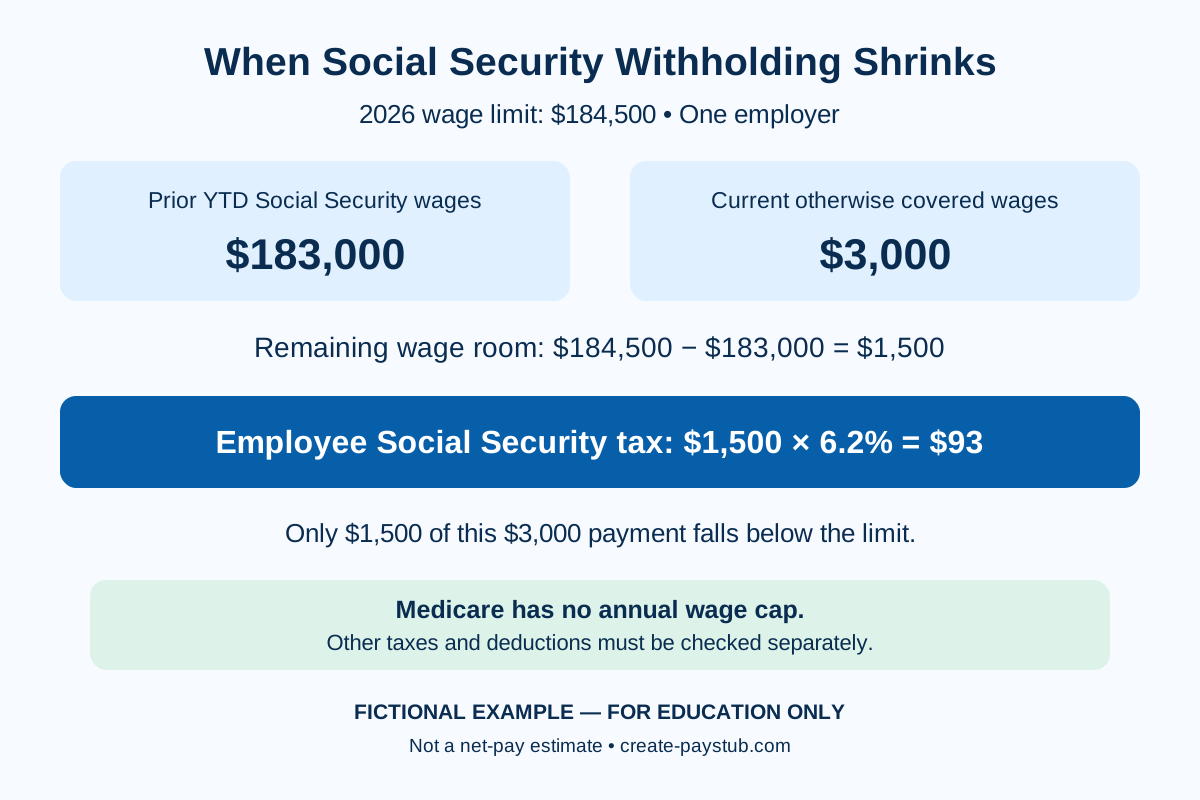
A full $3,000 taxed at 6.2% would produce $186. Here, only half of that payment fits below the limit, so the current deduction is $93. The employee's Social Security wages reach $184,500 after this payment. Later otherwise covered wages from that employer in the same calendar year would not add ordinary Social Security withholding under these assumptions.
Use the previous statement's YTD figure for the starting balance. The current statement's YTD total generally already includes the current payment; subtracting from that total and then adding the payment again would mix the periods. See our YTD reconciliation guide for that distinction.
Why Medicare and other deductions can continue
IRS Topic 751 explains that Medicare has no wage-base limit. It also describes Additional Medicare Tax withholding on wages an employer pays above $200,000 in a calendar year. Reaching the Social Security cap therefore does not mean that all FICA withholding disappears.
Review federal income tax, state and local taxes, and benefit deductions separately. A lower Social Security deduction can affect take-home pay, but it does not establish that the rest of the statement is unchanged. Compare the entire earnings and deductions section before predicting a deposit.
What if you worked for more than one employer?
Do not combine all your pay statements and assume a new employer should automatically stop Social Security withholding. IRS Topic 608 explains that excess Social Security withholding from two or more employers may qualify for a credit on your income tax return. If one employer withheld too much, the IRS instead directs you to seek an adjustment from that employer; a refund claim may be needed if it does not make the adjustment.
Keep each employer's statements and W-2 separate when checking the amounts. A tax-return credit and an employer payroll correction are different processes. Follow the IRS instructions for the relevant year and your circumstances rather than deleting or changing a deduction on an employer-issued record.
A focused payroll review checklist
- Identify the line. Confirm that it is employee Social Security withholding, not Medicare, income tax, or an informational employer contribution.
- Confirm the year. Use the applicable annual limit, not a figure from an older article or paycheck.
- Compare matching wages. Request the prior YTD Social Security wages and the current wages used for the tax calculation.
- Check adjustments. Ask whether a reversal, correction, or payroll-system change explains an unexpected amount.
- Keep employer records separate. Identify whether any apparent excess came from one employer or several.
“My statement dated [date] shows a smaller or zero employee Social Security deduction. Please confirm the prior YTD Social Security wages, the current taxable amount, and whether the annual wage limit or a payroll adjustment caused this change.”
If the figures do not explain the change, use our pay stub correction checklist to document the discrepancy and request a written response. A zero deduction can have an explanation other than the annual limit; this example does not establish your coverage or tax treatment.