
A pay stub can show both a bonus and a separate overtime adjustment related to that bonus. The second entry may be additional earnings owed because the bonus increased the regular rate used for overtime. It is not necessarily another bonus, a tax, or a duplicate payment.
Some bonuses affect the overtime calculation
The Department of Labor's Fact Sheet 56C explains that nondiscretionary bonuses generally belong in the regular rate unless another statutory exclusion applies. Examples include bonuses based on a predetermined production formula. Whether a bonus qualifies as discretionary depends on the actual arrangement, not just the label used on a statement.
Ask for the bonus terms and the payroll explanation before classifying an unfamiliar entry. This article focuses on earnings calculations. For deductions from a bonus payment, see our separate bonus withholding guide.
Example: a $96 bonus creates $8 of additional overtime
Assume a fictional covered, nonexempt employee worked 48 hours in one workweek at $20 per hour. The standard federal weekly overtime method applies. Original pay was correct: $960 straight-time earnings for all 48 hours, plus an $80 overtime premium for eight hours, totaling $1,040. A $96 production bonus is later determined for that same week and must be included in the regular rate. Assume no other compensation or special overtime rules.
- Add includable earnings: $960 straight-time pay + $96 bonus = $1,056.
- Find the revised regular rate: $1,056 ÷ 48 hours = $22 per hour.
- Find the revised additional half-time premium: eight overtime hours × $22 × 0.5 = $88.
- Subtract the premium already paid: $88 − $80 = $8 additional overtime.
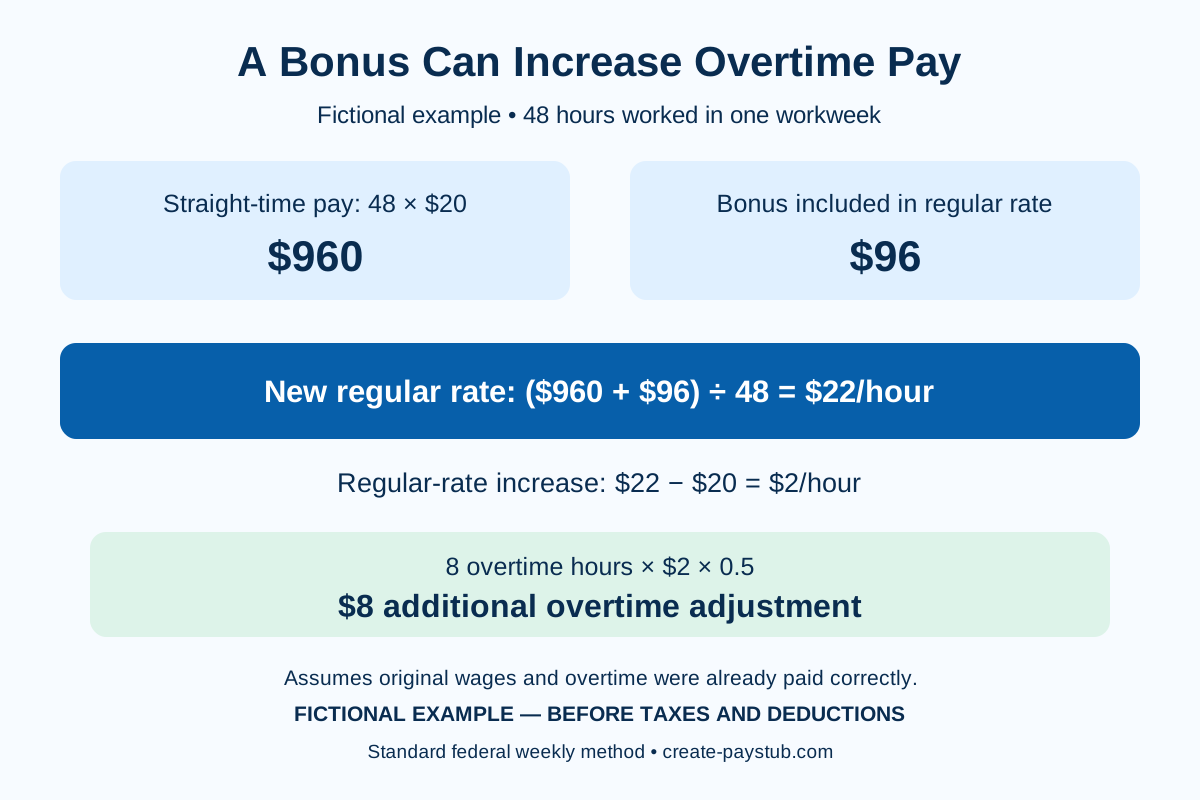
Total earnings for the week, after including the bonus and revised premium, are $960 + $96 + $88 = $1,144. Since $1,040 was already paid, the remaining gross amount is $104. Do not add the full $88 premium again when $80 of it has already been paid.
The original statutory overtime premium is not added to the earnings used in the regular-rate numerator here. The Department of Labor's Fact Sheet 23 explains the regular-rate calculation and exclusions. Our biweekly overtime guide also shows why straight-time pay and an additional half-time premium need to be read together.
A later payment may concern earlier workweeks
The DOL's opinion letter FLSA2019-7 discusses bonuses whose amounts become known after the covered workweeks. Its general explanation calls for allocating an includable bonus to the relevant weeks and calculating any additional overtime due. It also describes circumstances where a percentage bonus already pays the related overtime, so a separate adjustment is not always necessary.
Our example assigns the entire bonus to one week. Do not apply it directly to a quarterly or annual bonus by dividing only by the hours on the payment-date statement. Request the covered weeks, allocation method, and overtime calculation for each affected week.
A later adjustment also does not mean you worked those overtime hours twice. Keep the period the earnings concern separate from the date the adjustment was paid. A raise applied to an earlier period is a different situation, covered in our retroactive-pay guide.
What to check on your pay stub
- Bonus amount: compare the gross award with the written terms.
- Covered period: identify the workweek or weeks used in the calculation.
- Adjustment code: ask whether the line is additional overtime associated with the bonus.
- Amounts already paid: distinguish the remaining adjustment from the total revised earnings.
- Payment reconciliation: compare gross adjustments first, then review taxes and other deductions separately.
“My statement dated [date] shows a bonus of [amount] and an overtime adjustment of [amount]. Please confirm which workweeks the bonus covers, how it was included in the regular rate, and which overtime amounts were already paid.”
Keep the bonus notice, time records, original statements, and explanation together. If the figures remain inconsistent, use our pay stub correction checklist. State rules or a different compensation arrangement may change the calculation; the fictional example checks only the stated federal weekly method.