
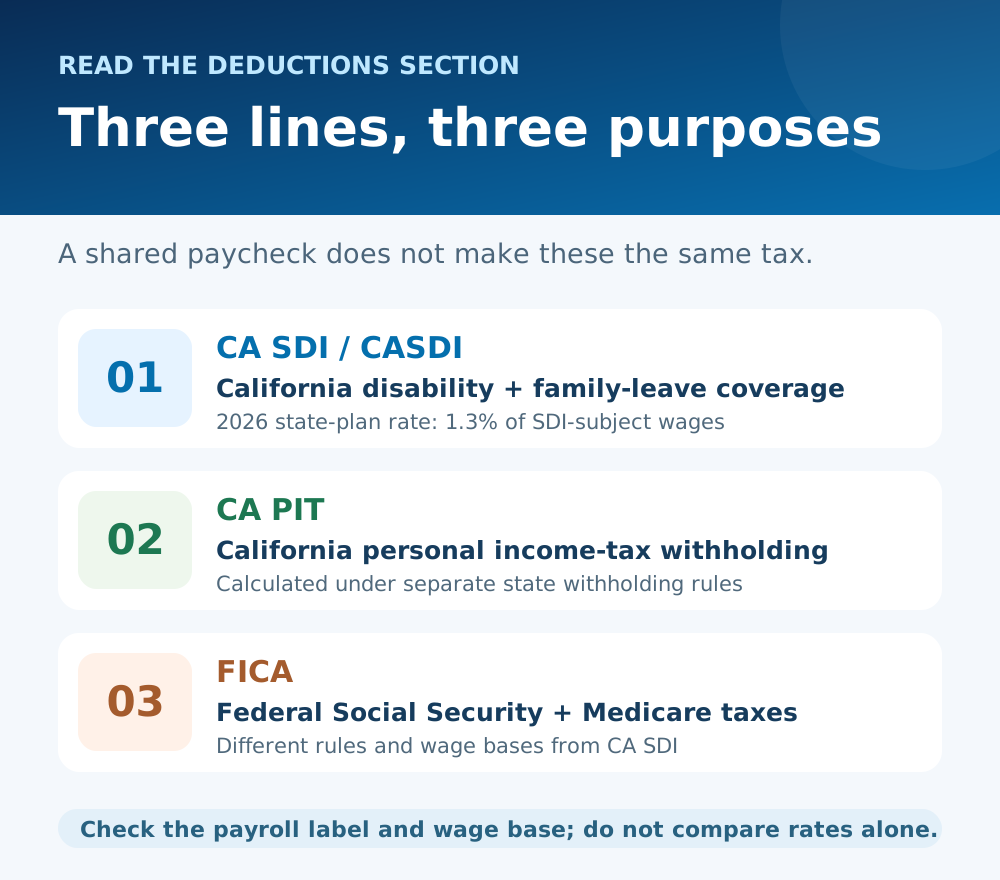
CA SDI on a California pay stub is the employee contribution to State Disability Insurance. For wages paid in 2026, the state rate is 1.3% of wages subject to SDI, with no annual taxable-wage ceiling. The contribution supports California Disability Insurance and Paid Family Leave. It is a separate deduction from California income-tax withholding and federal Social Security or Medicare tax. The Employment Development Department (EDD) publishes the 2026 rate and explains that the wage ceiling ended in 2024.
What does the CASDI deduction pay for?
California workers' SDI contributions fund short-term wage-replacement programs for eligible workers. EDD says these deductions support both Disability Insurance and Paid Family Leave; employers withhold and send the contributions. Seeing a contribution on your stub does not, by itself, establish eligibility for a particular claim. EDD says the deduction is often labeled “CASDI” on a pay stub. If your payroll system uses a different label, ask payroll what it represents rather than guessing from an abbreviation.
California's wage-statement requirements guide explains why deductions should be identifiable alongside gross and net wages. If you are reading several tax lines at once, our FIT versus FICA guide separates federal income tax from Social Security and Medicare; IRS Topic 751 describes those federal payroll taxes. CA SDI is different from each of them and from California personal income-tax withholding.
How to check the 2026 CA SDI amount
Use the wages subject to SDI for that payment, then multiply by 0.013. Do not automatically use your deposit, your after-tax pay, or the state income-tax wage figure. EDD's wages overview says subject wages and California personal income-tax wages are usually the same but can differ—for example, with some retirement contributions. It also notes that some employment and payments are exempt. Payroll can identify the exact wage base and any adjustment on your statement.
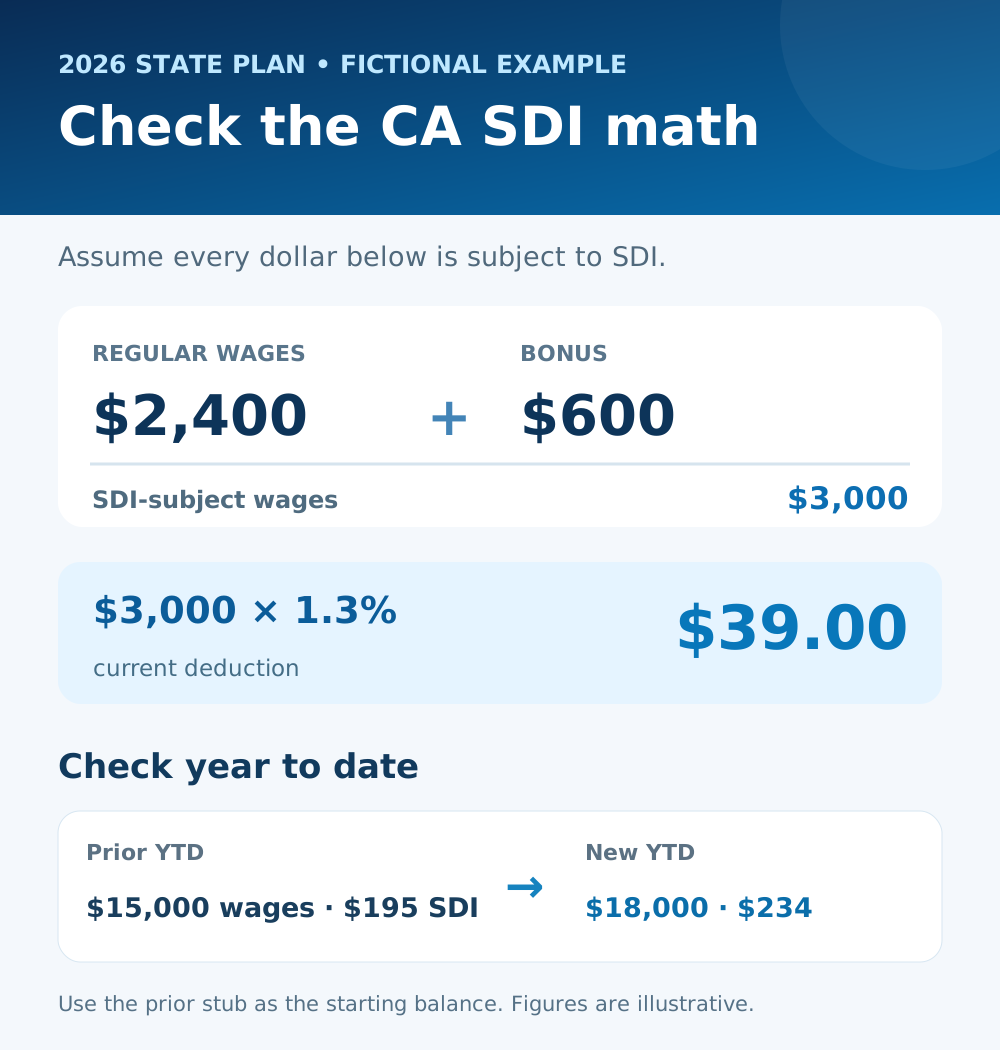
Consider a fictional 2026 paycheck with $2,400 regular pay and a $600 bonus. Assume all $3,000 is subject to SDI, the worker is in the state plan, and there are no corrections or special exclusions. The check is:
- Current SDI-subject wages: $2,400 + $600 = $3,000.
- Expected state-plan contribution: $3,000 × 1.3% = $39.00.
- YTD check: If the prior statement showed $15,000 in SDI-subject wages and $195 in SDI contributions, the new totals would be $18,000 and $234 under these assumptions.
Use the previous statement's year-to-date totals as the starting point. The current statement's YTD figures generally already include this payment; adding it twice creates a false discrepancy. Our YTD pay-stub guide walks through that distinction. A cent-level difference can arise from payroll rounding, while a larger mismatch calls for the actual SDI wage base and any correction details.
Why might the line be missing or differ from 1.3% of gross pay?
There is no 2026 SDI wage cap that makes ordinary state-plan withholding stop after a particular annual earnings amount. But gross pay is not always identical to SDI-subject wages, and some work or payments can be exempt. A reversal, correction, or payment from a different period can also make a simple one-line calculation misleading. EDD's subject-wages explanation is the right starting point; ask payroll for the wage base and the reason for any adjustment before treating the statement as wrong.
An employer may instead have an EDD-approved Voluntary Plan for disability and family leave. A voluntary plan must provide at least the state benefits plus one better benefit, and its employee contribution cannot exceed the SDI rate. The label and exact charge can depend on that plan; do not assume every voluntary plan uses a fixed lower rate. If you see a plan-related deduction or no CASDI line, ask payroll for the plan name, coverage, and contribution details. EDD lists the 2026 state and voluntary-plan reference rate as 1.3%.
What to compare at year-end
Keep your pay statements and compare the year's employee SDI deductions with your employer's Form W-2. The IRS instructions for Form W-2 say an employer may report state disability insurance tax withheld in Box 14 (“Other”). Box 14 is not a second deduction from your paycheck. If the label or annual amount does not reconcile, ask payroll how the W-2 figure was built, especially if a correction was made. Our W-2 versus pay-stub guide explains why annual tax boxes do not necessarily equal gross pay.
A focused question for payroll
Send the pay date, the CASDI or plan-related amount shown, and the wages you used in your calculation. Ask payroll to confirm: (1) whether you are covered by state SDI or an approved voluntary plan; (2) the SDI-subject wages for that payment; (3) the rate applied; and (4) any adjustment affecting the current or YTD amount. Do not change an employer-issued pay record yourself. If a correction is needed, our pay-stub correction checklist helps you document it and check the revised statement.
“My [pay date] statement shows [amount] for CASDI or disability coverage. Please confirm the SDI-subject wages, contribution rate or voluntary-plan terms, and any adjustment behind this amount.”